Under-The-Radar Players Who've Stood Out At The 2026 FIFA World Cup
Every World Cup, there are boxes of certain archetypes that always occur. This year, there are plenty of the usual tropes.
The true breakout stars, like Johan Manzambi supercharging Switzerland’s attack in their quarterfinal run, or Ismael Saibari scoring at will for Morocco.
The out-of-nowhere loveable stories, like Vozinha and the entire Cabo Verde team.
There are so many more of these classic boxes to tick as well, like the seemingly washed older players giving it one last run, the superstars showing off on the biggest stage, and many others.
But a personal favourite of mine is the under-the-radar quality performer. Someone who doesn’t get a ton of love from the average viewer, a player most people don’t really know anything about, but a guy who puts up a few great performances and leaves a lasting impression in the minds of the true sicko fans who watch every second of every game.
That’s what this article will focus on, a shot at five of these guys who have really stuck out to me as players that raised their stock in my viewings of them. Some of these players, like the one I’m about to mention, I’ve followed very closely in their club careers, while others are ones who I was less familiar with until this tournament began.
Nonetheless, here’s the list of five players who have quietly made a name for themselves at this year’s World Cup.
Gilberto Mora (Mexico)
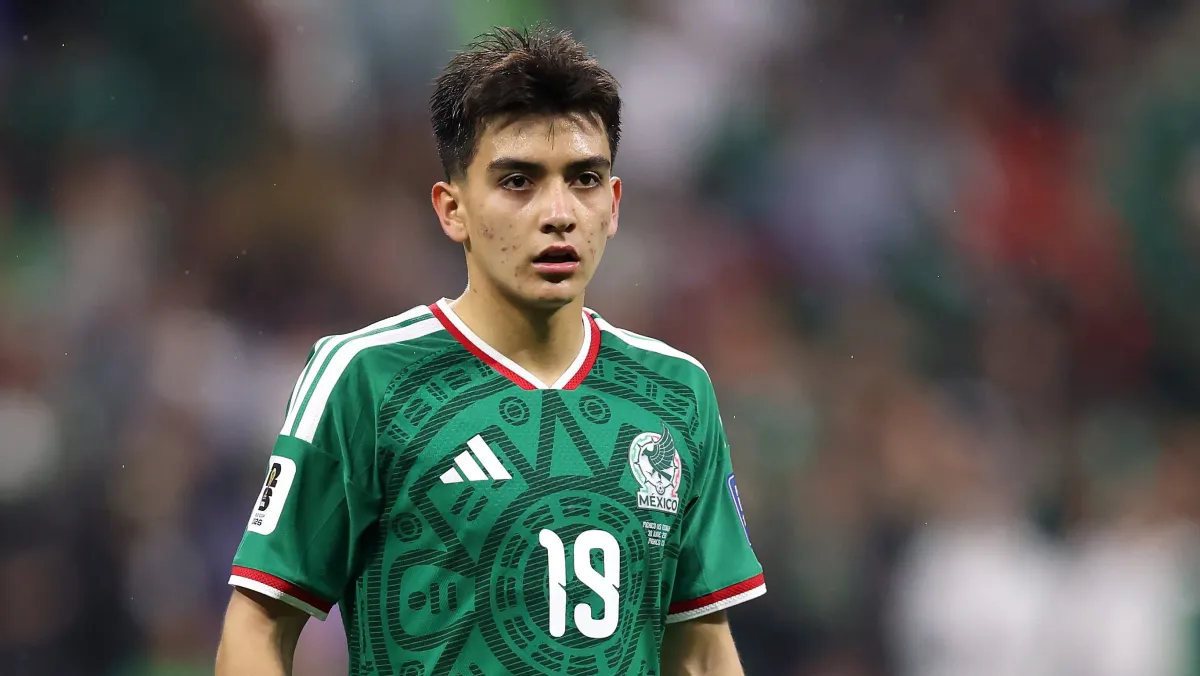
Unless you’re a real wonderkid nerd, a Liga MX fan or a really tapped in FM player, it’s unlikely you knew all that much about the Tijuana youngster Mora heading into this tournament.
Mexican manager Javier Aguirre eased his 17-year-old star into the spotlight of a World Cup, but once he got his feet wet in a start against Czechia in the third group stage game, he was never taken out of the starting XI.
Mora played pretty well against the Czechs on a day where Mexico didn’t need a result, yet still dominated from start to finish. But, his true breakout showing was in the round of 32 match against Ecuador.
Aguirre once again gave his youngster the start, this time in a game of major consequence against an Ecuadorian side that struggled in the group stage, but still possess some of the top defenders in the world, from PSG’s Willian Pacho to Arsenal’s Piero Hincapie.
In this game, Mora shone bright through his 60 minutes on the pitch, showcasing the best part of his skillset: building the game as a connector.
According to data from Futi, the Xolos star led Mexico in passes into the penalty area (4) and touches in the final third (33), and sat second behind Raul Jimenez for progressive receptions. This essentially illustrates his value in possession, commanding the ball in good spaces and using it to make the right play to move it into dangerous areas.
There’s also no lack of defensive effort in Mora’s game either, with his six high defensive actions in that game sitting as the most among Mexican attackers, and he visually looks like a hard-working and intelligent player in the press.
It’s also true he struggled against England in the round of 16 match, and it looked like at times going up against a midfield of Declan Rice and Jude Bellingham proved a bit too much for the youngster, but that will serve as a learning opportunity for a player who will play in many more World Cups to follow.
He’s not the most flashy, goal-threatening player in the world, and his future position likely sits as an all-action, roaming no. 8 rather than a winger or true no. 10. Mexico’s midfield is in a good place for a long time with Mora, Obed Vargas, Elias Montiel and Iker Fimbres.
Nicolas Raskin (Belgium)
At 25, Raskin is older and much more experienced than almost everyone else on this list. Playing for Belgium, he’s also in a nation that gets much more press coverage, and has a lot more quality.
And yet, it feels like the Rangers midfielder was a complete afterthought on this side heading into the tournament. He played a fair bit as a backup midfielder in some friendlies in March and June, and his only start of the group stage was in the 0-0 draw to Iran, where he played alright but really didn’t make much of an imprint in the middle of the park.
Clearly, Raskin was waiting for the knockouts to show what he could do. With the Belgians down 2-0 to Senegal in the round of 32, seemingly about to be eliminated from the tournament in a pretty lifeless fashion, manager Rudi Garcia made a massive call that would completely turn his team’s fortunes around.
Off came the team’s two big-name attackers in Jeremy Doku and Kevin De Bruyne. On came winger Dodi Lukebakio and Raskin.
Immediately, things began to change for Belgium. Raskin got on the ball a lot and in good spots, completing five progressive passes, two of which into the penalty box, with 23 touches in the final third.
The younger and more active player helped out in the repress as well, making a combined 13 defensive actions in his 60-ish minutes on the pitch, way more than the three De Bruyne managed.
Raskin helped tilt the field in favour of a Belgium side who were too easy to play through before his introduction, and helped lead an improbable comeback that sent his team through to the round of 16.
There, against the U.S., Garcia stuck with his guns and kept his game-changing substitutions as starters in the next match. And once again, Raskin balled out as an all-action midfielder, continuously stopping plays with his 19 defensive actions and once again had five progressive passes (which ranked him third on the team).
The Red Devils mopped the USMNT by a score of 4-1, and the dominance of the midfield was a big reason why. Now, Belgium is up against Spain in a key quarterfinal matchup, somewhere they wouldn’t be without Raskin’s involvement.
Mbekezeli Mbokazi (South Africa)
Being a 20-year-old centre-back playing on a team that qualified for a World Cup knockout stage is tough. Doing it at 5-foot-10 is even tougher.
But nothing seems to phase Mbokazi, the Chicago Fire and South Africa defender who just seems to do everything at a high level.
On the ball, he picks out long passes and big diagonal switches with ease. It was his comfort and ability on the ball that broke the South Korean defensive shape time and time again in that historic 1-0 win, and then his ability to play a long pass into space was the key to unlocking pretty much every single South African attack in their round of 32 loss to Canada.
Defensively, Mbokazi performed just as admirably. He’s quick and smart defending in transition, cutting off space to runners and angling players wide as much as possible. He led his team in low defensive actions (81) by a mile in the tournament, while also sitting second in progressive passes (20), a crazy feat for a centre-half on a team that doesn’t always hold possession.
Most South African fans and MLS fans know of the young defender’s quality, but this was a proper breakout party for the rest of the world to see. Surely, a move to a good side in Europe is loading in the next 6-12 months.
Patrick Beach (Australia)
One of the biggest managerial mistakes at this year’s tournament was Australia manager Tony Popovic pulling off Beach, who was having a blinder of a game, in the 119th minute of extra time for Matt Ryan ahead of penalties.
Ryan didn’t make a single save from the spot, and the Aussies went out to Egypt in the round of 32.
Statistically, the Melbourne City goalkeeper Beach had a tremendous tournament, sitting eighth in goals prevented at 1.2, with a pair of clean sheets and just three goals allowed in four games.
He showed good command of his area, and while Australia’s very low block didn’t need much from their goalkeeper in possession, that didn’t stop him from sending a couple long balls to Nestory Irankunda and other runners in space when given the chance.
But really, it was the saves Beach made, most notably a huge one against Egypt’s Rami Rabia in the 90+3’, that really elevated him into being one of the top goalkeepers in the tournament.
The 22-year-old shot-stopper has likely played his way into the shop window this summer, with plenty of teams likely to line up for a young, promising goalie who’s played well in his domestic league and showed himself brilliantly on the biggest stage.
Elijah Just (New Zealand)
Coming off a very solid debut season in Scotland with Motherwell, Just entered this World Cup as a projected starter on a nation that wasn’t expected to really do much of anything.
It only took one game for New Zealand to start making more waves, though. Really, the game plan was simple. They’d spray long balls at the chest of Nottingham Forest star striker Chris Wood, have him bring them down for Just operating beneath him, and hope those two could create something before the opposition defence could get set.
This worked like a charm against Iran, with the one-two interplay between the two attackers creating both goals for the All Whites, with Wood assisting Just twice in the 2-2 draw against Iran.
Past just the goals, the advanced midfielder really dictated the pace of the attack for his team. He completed seven progressive passes, two progressive carries, and had 45 touches in the attacking third. All of these numbers ranked in the top two for New Zealand that game.
While the rest of the tournament didn’t go quite as well as the All Whites were bounced in the group stage, Just still found another goal against Belgium in his team’s final game in another solid performance against a top side.
The 26-year-old’s play has put him right in the mix of transfer speculation, with championship clubs and the big two in Scotland looking to secure his services after his tremendous tournament.